Earth’s Mightiest Podcast

Erik Mona (Publisher over at Paizo) and I were guests a couple weeks ago on Earth’s Mightiest Podcast, an audio program normally focused on the Avengers, but this time they step into tabletop RPGs, Pathfinder and Skullkickers in a big way.

The podcast is long and our interview doesn’t start until the 37 minute mark of the program, but we cover a lot of different subjects once it gets going and there’s some really good stuff in there. Here’s a quick run through of major sections so you can focus on a particular part or two that interests you:

0:37:12 – Interview start; chatting about tabletop RPGs
0:40:50 – Chatting about Skullkickers
0:45:03 – Erik Mona joins in and explains his RPG industry cred and Pathfinder history
0:54:49 – I explain my nerd cred, RPGs, comics, manga
0:57:00 – Writing fantasy stories versus running an RPG
1:06:54 – Pathfinder comic discussion
1:45:50 – Skullkickers and Tavern Tales
1:47:17 – Art submissions and breaking in to the industry
1:59:50 – Conventions and pop culture
2:19:20 – Favorite Avengers line-up and stories
2:27:50 – Wrap up

Rambling About How I Write Comics – Part Three

I’ve talked about initial brainstorming, story progression and segmenting a comic story into issues/chapters. In this post I cover page-by-page pacing. It’s not a technique I hear much about, but I’ve found it invaluable for comic writing and hope you find it useful too.

Working with an artist who understands how to enhance and communicate a story makes a huge difference, but as the writer it’s your job to make that as easy and clear for them as possible. Comic writers need to think a bit like artists and comic artists need to think a bit like writers. The easiest way for me to understand where the visuals are all going to go and how they fit together is to create a quick page-by-page pacing list. It’s nothing fancy, but it is quite helpful.

I take a text file and create a row of page numbers and then go through my issue by issue breakdown to figure out how many pages each part of the issue will need. It gives me a simple way of measuring how much emphasis (page time, if you will) is being used for each scene. I can double check that it all fits and is well balanced before I start scripting. In an action-oriented series like Skullkickers I can make sure there’s enough ass kicking. It’s the main thrust of the series and I don’t want to get so caught up in talking scenes that I lose track of that emphasis on combat. The last two issues of each story arc are usually wall-to-wall action. For my other comic stories I have quite different plot/mood goals and adjust the pacing accordingly.

A page-by-page pacing list also gives me an easy way to ‘see’ where ‘page turners’ will go. Assuming my story starts on page 1, then each even-numbered page (2, 4, 6, 8, etc.) causes the reader to flip to a new spread. If I want to subtly encourage them to keep reading or reveal a big surprise, using the page count to my advantage helps a lot. If a character turns to look behind them because they think they’re being followed on the last panel of an odd-numbered page, we want to turn the page and find out who they see. That’s a cliché example of a page turner, but it works. If I put that reveal on the odd numbered page instead, then the reader would already have the surprise ruined for them as their peripheral vision picked it up.

Okay, so hopefully I’ve convinced you that a page-by-page pacing sheet has merit. Let me assure you, it’s not complex. It’s a point form list. Here’s an example of a pacing sheet from Skullkickers issue 3:


SKULLKICKERS #3

01 Camped out under the stars – full page
02 Banter/poison
03 Merchants prepping to attack
04 More banter/eat the stew
05 Peyote dream begins
06-08 DREAM and PROPHECY? – 3 page spread
09 Wake up/barf/revelation
10 Merchants fail
11 Travel to the tower. Dwarf sick.
12 Arrive at the fortress. Guards.
13 Sneak by first wave of skeletons
14 Sneak quietly inside
15 Exploration
16 Reveal the necromancer’s ‘lab’
17 Mistake
18 Fight breaks out
19 Fight
20 Fight
21 Fight/human hides
22 Dwarf captured by necromancer – full page

Yup. That’s it. Just a simple list justifying the existence of each page.

Want to see how it all played out in the comic? You can read the whole issue starting right HERE.

In Skullkickers the pacing list is usually quite simple. On more complex stories I’ll have more points per line, but the overall approach is similar. The page-by-page pacing gives me a clear sense of how much time is being given to each scene, where the page turners will be and ensures that all the plot points I need covered in the issue will fit.

I still have tons of creative flexibility in how all of the above is presented when I do my actual scripting, but it’s a crucial map. When I start scripting I have clear goals about where it’s headed and don’t waste time writing material that isn’t relevant. If I come up with a better way to pace things as I script, I’ll usually go back to my page-by-page list and adjust it, so when I stop mid-script my plan accurately reflects what I’ve already completed.

The issue breakdown and page pacing also act as an important reminder and inspiration point for me. When I’m juggling multiple (often, very different) projects at the same time it can be tough to get ‘back into the groove’ on writing. Having a plan puts me back in the right head space to keep working. It’s far easier for me to write at odd times or in strange places because the story plan solidifies my productivity. I’ve written at airports, on trans-Atlantic flights, in hotel rooms… anywhere I can get my laptop up and running. Even when things are crazy-busy I can find time to write one or two pages inbetween a hundred other things that need to get done. I can walk away and, when I come back, that outline and pacing sheet reminds me of where I was and where I need to go.

My comic writing method front loads most of the story building at the start, developing the road map. By the time I sit down to actually script, almost all of those technical/plot issues are solved so I’m free to concentrate fully on describing really cool places, brainstorming wild action or coming up with catchy/ interesting dialogue. I’m no longer worried about whether or not the page I’m working on at that moment is going to be relevant or pace properly – it does and it will because I already figured it out, issue-by-issue and then page-by-page.

In my next post I’ll talk about the actual scripting process. I hope you find my ramblings useful. If so, feel free to let me know here (or on Twitter) and share the posts with your friends.

Click here to read Part 4

Jim Zub at San Diego Comicon 2012!

Here we go again, my 10th year at SDCC. A decade ago I had no idea I’d be starting on a new career in comics. When I think about everything that’s changed, both for myself and the industry as a whole, it blows my mind. My fingers are crossed that this is the best year yet.


BOOTH:

I’ll be toggling between two different booths. Edwin and I are set up with Image Comics at Booth #2729 promoting Skullkickers. UDON is set up at #5037 selling comics and art books. Both areas should be hopping. If you can’t find me at one, then I’m at the other or on a panel.


MERCH:

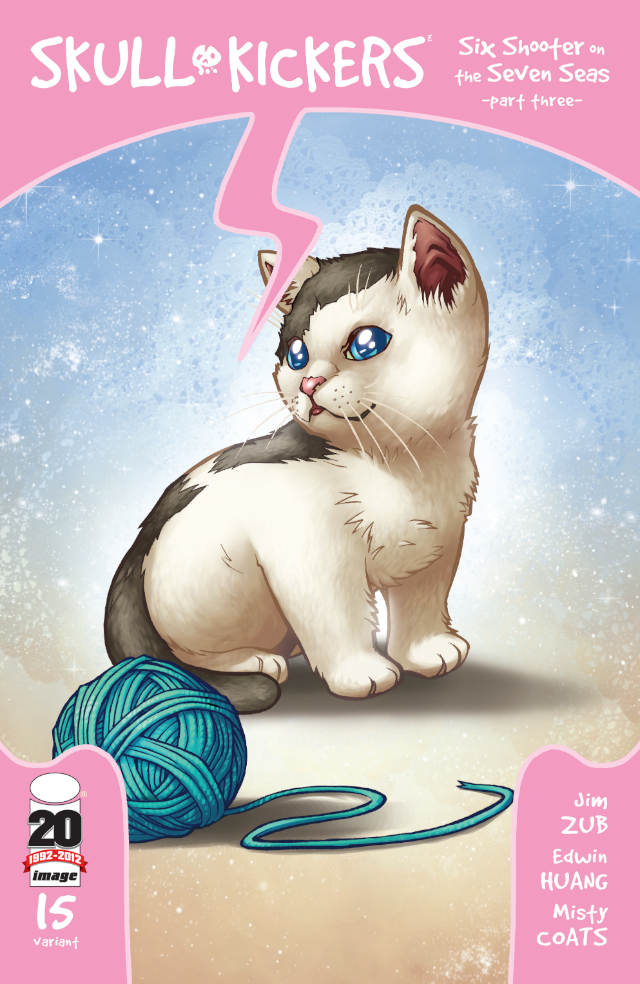
Our exclusive for the show this year is our Kitten variant cover for Skullkickers #15, which will be available in limited quantities.They’ll be selling for $5 personalized, or $10 signed/raw as an incentive for fans to keep their copy rather than flipping it.

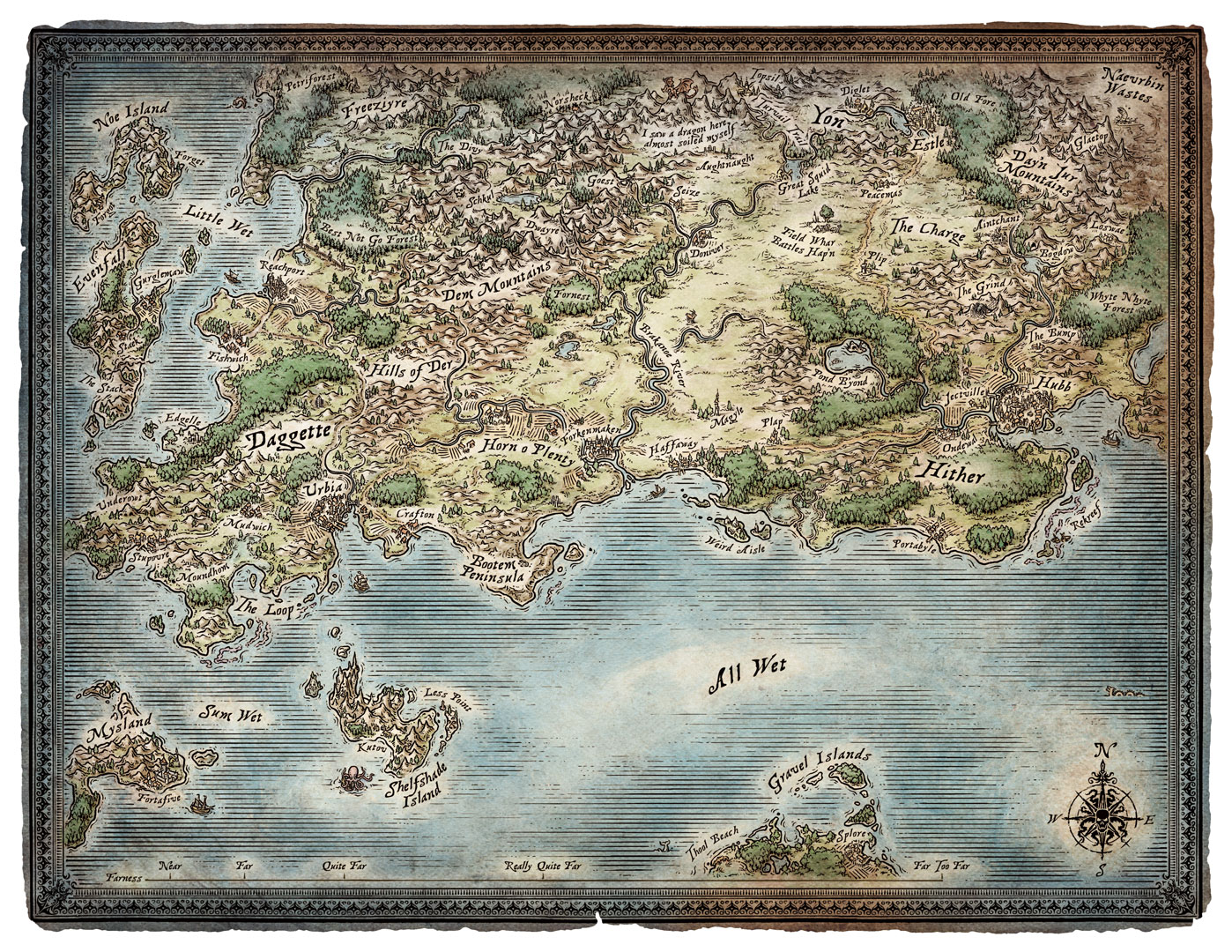
We’ll also have copies of the Skullkickers Map poster, Skullkickers Treasure Trove, sketch variant covers and, of course, regular trade paperbacks on hand.


PANELS:
I’m on a slew of panels this year, 5 in total. Apparently I talk too much. 😛

FRIDAY
4:30-5:30 UDON 2012—
Catch up on the latest releases and get the scoop on upcoming projects from the UDON crew, including comic and art book announcements you won’t want to miss! Included will be sneak peek artwork, insight into the recruiting process for new artists, and a chance to win some of the company’s hottest new books. Moderated by Chris Butcher (Toronto Comic Arts Festival, UDON’s director of marketing), with participants Erik Ko (UDON CEO), Jim Zubkavich (UDON Project Manager), Matt Moylan (UDON Managing Editor), and UDON artists Joe Ng (Street Fighter IV) and Omar Dogan (Street Fighter Legends). Room 26AB

SATURDAY
11:00-12:00 Shifty Look—
Namco Bandai Games has excavated the darkest corners of its vaults, and now the decrepit husks of games you’ve always loved (or never knew you did) have been brought back to life! Find out what’s next for ShiftyLook from Rob Pereyda (editor-in-chief), then join a spotlight on hit webcomic Bravoman from writer Matt Moylan (Lilformers) and artist Dax “D-Gee” Gordine (Mega Man Tribute). Next, webcomic superstars and Dig Dug 30th Anniversary contributors Scott Kurtz (PvP Online) and Kris Straub (chainsawsuit) make a big announcement fans with any sense of anything won’t want to miss! Finally, legendary voice actor Rob Paulsen (Animaniacs) makes a special appearance with an amazing ShiftyLook announcement that will blow everyone away. This will be the most fun you’ve ever had with ‘80s video games! Room 25ABC

12:00-1:00 Comic-Con How-To: Supercharge Your deviantART Profile Like the Masters— This superstar lineup of comic, manga, and animators all have something in common besides ridiculous amounts of talent: they are all part of the deviantART community. Over the years they have learned a thing or two about getting the most out of the website, and in this panel they will share their tips and tricks on how to get the most out of your deviantART experience. The panelists are Adam Warren (The Dirty Pair, Empowered), Chris Sanders (creator of Lilo & Stitch and How To Train Your Dragon), Dave Elliott (Comic Industry Veteran), Jim Zubkavich (UDON Project Manager), Kevin Eastman (co-creator of Teenage Mutant Ninja Turtles), Mark Brooks (Marvel Comics), Yuumei Yan (digital artist, cyber-activist) and panel moderator Angelo Sotira (deviantART CEO). Room 2

7:00-8:00 Writers Unite! Pitching Your Creator-Owned Comics— Creator-owned comics have grabbed the imagination of the comic-reading community all over again and publishers are looking for fresh ideas from a new generation of talent. Listen closely as creators Cullen Bunn (The Sixth Gun), Ray Fawkes (One Soul), Charles Soule (27), and moderator Jim Zub (Skullkickers) discuss pitching their hit comic series to publishers and offer advice on how to climb to the top of the treacherous submission mountain, along with comic writing techniques and amusing anecdotes. Room 23ABC

SUNDAY
2:00-3:00 Kickstarting Your Webcomics Career: Keenspot 2012—
Pioneering webcomics publisher Keenspot returns for their insane 12th annual Comic-Con panel to drop some knowledge! Get words of wisdom from the man behind the second most-funded Kickstarter comics project of all time! Learn how a popular Image Comics creator doubled his book sales at cons by giving his comic away for free online! Hear an amazing major announcement about the future of comic books! Creators scheduled to appear include Thomas Fischbach (Twokinds), Jim Zub (Skullkickers), Benny Powell (Wayward Sons), Brion Foulke (Flipside), Jennifer Brazas (Mystic Revolution), David Campiti (Exposure), R. C. Monroe (Out There), Chris Daily (Punch an’ Pie), Charles Soule (27), and Bobby Crosby (Last Blood). Room 4


Yeah, 10 years and this one will be the craziest yet! I hope to see you there. 🙂

Rambling About How I Write Comics – Part Two

In part one I talked a lot about story flow and initial brainstorming. This time I’m going to go more in-depth with the planning process.

As I mentioned before, I’m a story structure nut. I rarely write my comic scripts without previously breaking down the story into point form notes that act as a guide for the main ‘beats’.

This is how I do it.

After brainstorming a jumble of ideas – possible set pieces, action scenes, motivations, characters, themes, jokes, sometimes even snippets of dialogue I think might be important, I start putting them in a rough sequence.

• In order for this ‘thing’ to work/happen, what needs to come before it?
• What information does the reader need in order for this next part to make sense?
• How do we get from this part to the next one?
• Most important – Is this entertaining?

Assembled in rough order, what seemed like a lot of ‘stuff’ when I began opens up into chunks of content with gaps in between that need to be filled – Gaps of logic, gaps of motivation, gaps of time, you name it. Before I tighten all that up, I start separating the story into issues or chapters.

I’ll use Skullkickers as my major example here. In Skullkickers, I have 5 issues for each story arc, and each one of those arcs builds towards the master story (which, at this point, looks like it’s going to encompass 6 arcs). Based on the type of story Skullkickers is (unapologetically over-the-top action-comedy sword & sorcery), it feeds on action, and lots of it. Each issue needs to open in an entertaining way and end with some kind of cliffhanger or surprise. That kind of storytelling fits Skulkickers very well, so when I start separating my brainstormed bits into 5 ‘parts’ I start to see if certain issues are overloaded or skimpy in terms of content:

• Have we given the characters proper motivation to do what they’re going to do?
• Is there enough action?
• Do we open strong and end strong?
• Are the stakes being raised in each issue of the arc with bigger/badder threats leading to the climax?
• Am I avoiding repetition in the types of conflict being shown and how our characters deal with them?
• Most important – Is this fun? Does it ‘feel’ like a Skullkickers story?

The above questions are specific to the pacing of Skullkickers. A lot of them carry over to other stories but that list isn’t perfect. Each project I work on has different story flow parameters and different questions core to how I think they should work. Quite a few people have told me that Makeshift Miracle reads like a completely different person wrote it, and I’m proud of that. It was built to read very differently.

Scenes get trimmed or expanded to fit. Threats are added, moved or taken away. I double check my master story plan (the 6 arc plan) to make sure the overplot that needs to be addressed in this arc is included. At every stage I need to be able to ask myself “Why are the characters doing this?” and have a valid answer that fits the plot and their personalities. It has an internal logic. It can take quite a bit of time, but the exercise of doing the story breakdown helps generate a lot of new ideas for me. If any parts I came up with aren’t used, I put them away for possible future use.

The original idea for the first story arc of Skullkickers was “by the end of the story these two idiots have to literally kick the skull of a gigantic creature”. That was the climax. I had to figure out how to get them there. I worked out the ending and then put a bunch of lesser, but increasing, threats in the way. Knowing where it was headed helped me brainstorm the assassinated noble, the zombie attack in the morgue, the necromancer, the possessed leg – all the rest. I varied the types of action, the location and the motivations along the way so it kept the reader wondering where it would all lead. You can read the whole story arc online for FREE starting right here, if you want.

My story breakdown reminds me of all the important plot points I need to cover so I don’t waste space. It keeps me from writing material that might get cut. Over 17 issues of Skullkickers (300+ pages), I’ve only cut/majorly rewritten 5-6 pages. I think that’s a good ratio. I don’t expect that the exact same methodical story building technique will work for everyone, but it works for me.

In my next post I’ll talk about page-by-page notes I use before I start scripting. From there, I’ll probably do a post about dialogue and timing. I hope you find my ramblings useful. If so, feel free to let me know here (or on Twitter) and share the posts with your friends.

Click here to Read Part 3

Skullkickers Kitten Variant Cover at SDCC!

Image has unveiled their San Diego Comicon 2012 exclusive items and we’re quite happy to announce that one of those spiffy exclusives is the infamous SKULLKICKERS KITTEN COVER!

If you’re at the show next week, make sure you swing by BOOTH #2729 and grab a copy. They’ll be selling for $5 personalized, or $10 signed/raw as an incentive for fans to keep their copy rather than flipping it.

Rambling About How I Write Comics – Part One

While blabbing away on Twitter last night the conversation organically moved into comic writing. Explaining my process in short 140 character tweets was kind of a pain, and I realized it was worthy of a few blog posts, so here goes.

Comic writing is pretty free form in that there’s no standard format. Some writers do broad outlines of what’s happening in the issue and then let the artist draw the story, coming back at the end to add dialogue to the pages (this is the original ‘Marvel Method’) but that’s pretty rare nowadays. The stories being written now are way more intricate and most artists aren’t used to winging it quite so much.

The norm at this point is ‘full script’, which is just what it sounds like – writing out page by page and panel by panel descriptions of the action and dialogue so the artist can plan and illustrate the entire issue. It’s more time consuming, but also a lot more focused. Even within that full script approach, unlike movies and TV, there’s no standard for script format, terminology, spacing or anything. Each writer kind of kit-bashes a script format together that works for them and goes from there. If the format is clear and the artist gets the information they need, that’s the most important part. Everything else is just personal preference and a general professional look to the work. I previously posted up a copy of my script for Skullkickers #1 you can check out HERE if you want to see my particular scripting style.

I’m a story planning junkie. I know there are people who just dive in and start writing ‘page 1’ without any idea where things will go, letting the muses kiss their fingertips clattering along the keyboard, but I’m not one of those people. I plan a lot of the story structure up front and it’s time consuming, but once that idea and pacing phase is done I write fearlessly because I know the overall plan and won’t lose my way. I can clearly visualize scenes and anticipate how they’re going to play out, driving me to get to them. If I come up with better ideas along the way or inspiration strikes a scene, I can work it into the structure and adapt. I rarely need to cut or heavily revise material because I’ve built a solid story foundation to work from.

So, how does that work?

The first thing I do is brainstorm a series of point form ‘things’ – facts that need to be relayed to the reader so the story makes sense – character traits, settings, antagonists, goals, character changes or revelations. It’s a giant jumble of story ideas, characters and key moments – the raw story ingredients all piled up.

Then, I look at the length of my story. If it’s a work-for-hire comic story then the format is probably a set number of pages. If it’s my own project then I rough out how much space I think I’ll need to make it work (number of issues or number of pages for a self-contained graphic novel). Once I know the number of issues/chapters I can start to plug in my jumbled pile of elements and get a sense of story flow.

The classic approach to story flow is called the ‘3 Act Play’ and it’s one constantly used for movies, sitcoms, short films, novels… you name it. If you don’t know what it is and you’re shown it, you won’t be able to un-see it, but that’s not a bad thing. It’s a very logical way of building a story and isn’t as rigid as it may sound.

In simplest terms:

ACT 1 – INTRODUCTION: Who, What, Where and When (‘Why’ may not be answered in this stage). Who are the main characters? What are their initial goals? Where are we? When does this take place? Giving your audience this information in an entertaining way engages them and preps them for the larger story to come. Even in a mystery you need to impart enough of the above for people to feel grounded in the story and ready for act 2.

TRANSITION – THE CHOICE: In the classic version of the 3 Act Play the transition between Act 1 and Act 2 is the main character(s) really diving in to the challenges before them in a way they can’t go back from. If they could just back away without consequence, then the threat level doesn’t seem so bad. Once they’ve agreed to the mission, told that person they want to date or picked up the cursed artifact, they’re pulled in and can’t go back to their old life. They have to work through the resulting conflict.

ACT 2 – CONFLICT: Conflict can take on many forms and most stories have multiple types of conflict woven together. Physical, mental, emotional conflict. This is where all those classic concepts of Man VS Man, Man VS Nature, Man VS Technology, Man VS Society, Man VS Himself, Man VS Wo-Man comes into it. Your characters need something to rail against. Epic or mundane, there’s something to overcome. When it comes to classic Hollywood blockbusters this tends to be once-in-a-lifetime kind of conflict where people are saving the kingdom, the world, the universe kind of stuff, but conflicts can be as quiet or bombastic as you want. Romantic comedies have the exact same structure, just with a different set of goals and outcomes.

This act is the real meat of your story. Ideally, the audience wants to enjoy the shifting threats, victories, failures and unexpected twists that come from the conflict. There’s usually ‘callbacks’ to the things we learned about the characters from the introduction, but not so obviously that the audience can see exactly where the story is going. Creating unexpected but appropriate conflict is one of the toughest elements of storytelling, especially with a media culture that’s inundated with stories and has ‘seen it all’. If you can surprise them, that’s ideal. If not, at the very least make them care about the characters so they want to see it through to the end.

TRANSITION – CLIMAX: The biggest action, the most important decision, the most intense outcome is almost always saved for the end of act 2. It’s the payoff for everything we’ve built and is called ‘climax’ for a reason. This is where people admit their love for one another, the world is saved or the most ridiculous special effects money is spent. After this, it’s a steep downhill finish as things are resolved.

ACT 3 – RESOLUTION: Did they live “happily ever after”? Are their lives an echo of who they were at the start? Has everything changed after conflict? This act tends to be the shortest since the audience has been given almost everything and we’re emotionally winding down. Medals are given out, things are learned (or ignored) and credits are rolled. If this is just one part of a larger story then there may be a lot of unanswered questions, but that’s okay as long as we’re keeping them in mind for the future, things moved forward and felt relevant to the whole.

An even shorter way of explaining it is the old stage magic credo:

“First I tell ’em what I’m gonna do, then I do it, then I tell ’em what I done.”

That’s a weird part of working on Skullkickers. Even if it feels ridiculous and random (because that’s how I want it to come across), the structure underneath isn’t. I’ve created a story that reads like it’s out of control and can’t possibly all work, but after the original short stories it was actually tightly built to feel that way. Underneath that chaotic mass is a larger structured story I’m chipping away at that, if I do my job correctly, will pay off in exciting ways, surprising the audience while still feeling appropriate. That’s the plan, anyways.

Whew. Okay, I went into a bit more depth then I’d originally planned. In another blog post I’ll talk about how I take my idea pile and use aspects of the 3 Act Play to make it all work together.

Click here to read Part 2

Maximum Pixelation Interview

Dan Spezzano from Maximum Pixelation interviewed me all about the Pathfinder comic series I’m writing. Some good new information on content and future plans. Check it out.

Makeshift Miracle Promo on Electric Playground

The crew at The Electric Playground filmed this interview with me at TCAF back in May and it’s finally available online. Check it out!

Newsarama Interview Now Up

Albert Ching at Newsarama put together a new interview with me all about the Pathfinder comic series I’m writing that starts in August. There’s brand new preview artwork and some solid information in there for folks to check out. Click on through!

Interview Attack!

Lots of new interviews being posted up lately. Check ’em out:

ICV2 has a two part Pathfinder interview (part one, part two).

Geek Native covers info about Pathfinder.

Panel Bound talks about Pathfinder writing.

Panel Pals goes through general career stuff and how I got my start in comics.

Skewed and Reviewed covers working in comics, Pathfinder and Skullkickers stuff.