Category Archives: Tutorial - Page 9

Here Comes The Pitch – Part Two

In part one of this tutorial series I gave a pep talk/beatdown about how difficult it is to cold pitch publishers and what you’re up against. This time I actually show a pitch example and stress the importance of length.

A lot of would-be comic writers are under the impression that pitching their comic story is all about showing how much work they’ve done. They pound out 100 pages of story notes/script and send it all off in a huge batch, expecting it will blow away the editor who reads it when they see how in-depth it is and how much hard work has been put into it.

The reality is the complete opposite:

Your pitch should be short! The longer it is, the worse your chances are of making a positive impression because the editor won’t even finish reading it.

Remember what I said last time about the cold pitch being incredibly low on an editor’s priority list? Editors don’t have time to pore over long writing samples, especially from someone who doesn’t have a professional body of work to back them up. They’d be hard pressed to read a lot from writers they’re actively working with on current projects let alone someone new sending them a pitch out of the blue.

You need to sum up your concept in 1-2 pages and grab their attention right off the bat.
It’s not about how much you send, it’s how engaging and focused it is.

Your story idea may be incredibly complex. It may span dozens of characters over generations and cover every emotion in the human condition, but if you’re trying to break in you need to filter all that detail down into something manageable and concise.

One page is ideal. Two if you absolutely must. I’m serious.

My creator-owned comic called Skullkickers has 18 issues published so far. Over the course of those issues it’s grown in surprising ways and now encompasses werewolf hunting, goblin attacks, necromancers, poison brewing, hallucinogenic prophecies, undead giants, plant creatures, murderous faerie folk, Lovecraft-style elder gods, demons, interdimensional time travel, cursed artifacts, pirates, cowboys and legendary sea monsters. All of it is fun and kooky stuff.

BUT – practically none of that complexity was in the original pitch. The pitch was tight and simple, covering the broad concept of the series in a straight forward way so it was easy to understand and digest. When an editor saw the pitch, they could immediately understand the main idea and ask for more details if they liked what they’d initially read.

Here’s the original Skullkickers one page pitch:


SKULLKICKERS
by Jim Zub

“No magic. No problem.”

Pitch:
In a backwater fantasy world filled with all manners of magical beasts, poverty, disease and other horrifying threats, it’s a daily struggle to survive. Most people keep their head low, stay in the village they were born and eke out a life as a farmer or simple trades person. The only ones strong enough to have anything else are protected by sorcerous powers or are in the employ of the demonic.

Except for our two protagonists – They thrive by being stubborn and tough as Hell.

No one knows where this human and dwarf came from or how they’ve survived so long without using a speck of magic. They travel the land slaying every kind of beast in their path with sheer physical grit and vicious trickery. They’re not heroic or even nice – in fact they might be two of the most irritating and ornery assholes to ever heft a blade. No matter how obnoxious they may be, no one can argue with their results and the huge trail of corpses left in their wake. In a world of the weak, they’re fighters.

Some folks will despise them, others will praise or even worship them – they don’t care. They’d kill anything for 2 copper pieces.

Overview:
Skullkickers is a fantasy parody on steroids. It revels in the clichés of sword and sorcery while injecting them with an extra spark of sass and violence. It’s not deep and meaningful by any stretch, instead keeping readers engaged with snappy dialogue and inventive use of monsters and action. Like Ash from the movie Army of Darkness, our “heroes” are so full of themselves and yet incredibly capable that readers will like them even when they’re being absolute jerks.

Summary:
Our two jackasses become entangled in the plot of an evil necromancer who is gathering together an army of skeletons, shambling dead and stitched-together horrors to conquer the local countryside. What this death mage doesn’t know is that the rituals he’s using to build his army of the dead are actually binding demonic spirits to corpses, not just animating them to life. The forces he’s set in motion lead to a full-on demonic invasion from the nether regions and the only thing standing between burning hellfire and the kingdom are a pair of death dealing mercenary assholes.


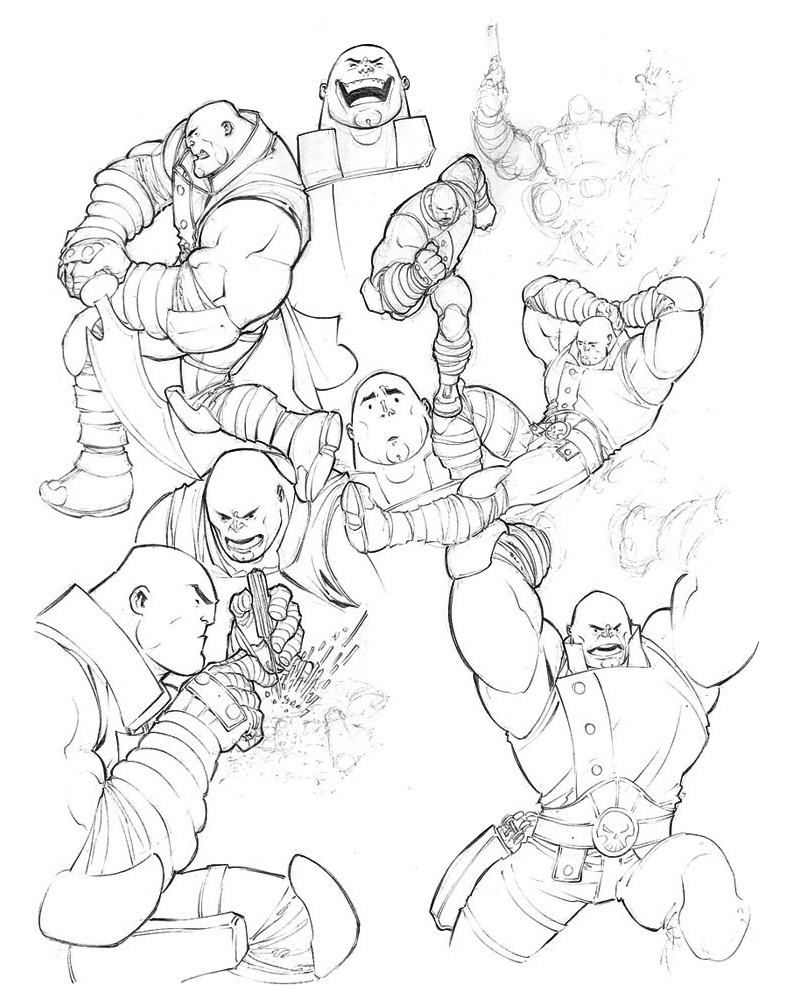
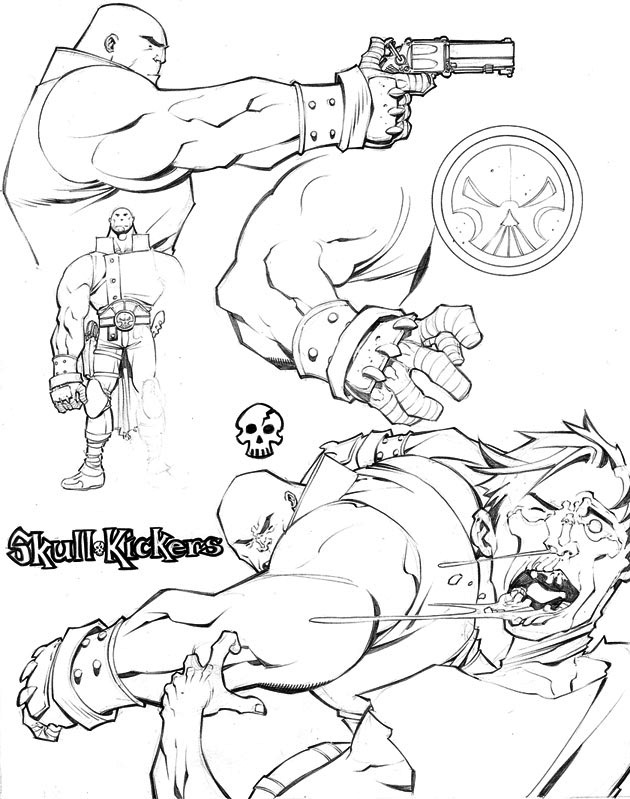
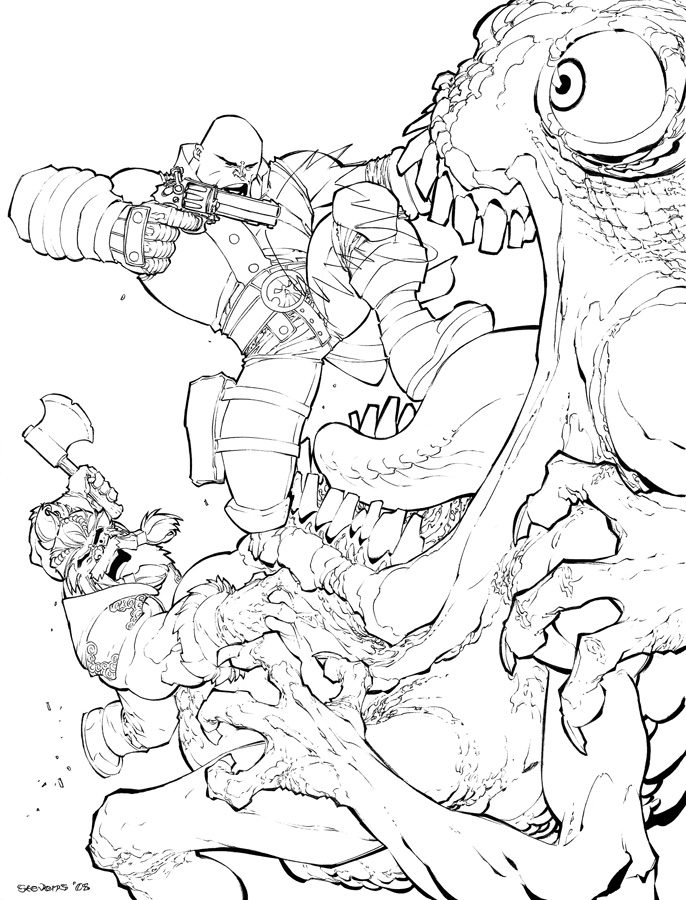
Along with that summary was 4 pages of character sketches by Chris Stevens, helping solidify the ideas presented with his professional quality art:

It’s not perfect, but it is concise. You read it and are well informed about the core concept: These two guys are ass-kicking monster hunters and this series is going to be an irreverent fantasy-adventure romp. Conan the Barbarian meets a buddy cop film. Got it.

(Update May 2015– I’ve recently posted the pitch document for Wayward, my new creator-owned series as well. Check that our HERE.)

In short – The pitch is simple and entertaining. The art helps grab attention, reinforces the concept, and solidifies the whole package as professional-looking and appealing.

Skullkickers is a fun and violent pulp adventure, so that’s exactly what’s emphasized at the forefront of the pitch. None of the other back story elements matter at this early stage. There’s nothing subtle here. The editor can quickly read through and decide if they want more information by contacting me (my contact info was in the header/footer on each page). Ideally they’re hooked but, even if they aren’t they’ll probably appreciate that I didn’t waste their time.

Your story ideas can be scrawled out on dozens of pages. Your scripts can look like telephone books. Your plot and world building can fill giant tomes. None of that matters. If you’re breaking in and want a publisher to check out your idea, you need to percolate all that material down into a bite-sized summary to gain their interest.

Make sense?

Next time I’ll talk more about the different sections of the pitch, ways to stand out and some stuff to avoid.

If you found this post helpful, feel free to let me know here (or on Twitter), share the post with your friends and consider buying some of my comics or donating to my Patreon to show your support for me writing this instead of paying work. 😛

Click here to read Part 3 of this tutorial

Here Comes The Pitch – Part One

Like I did with the blog series focused on my comic writing methods (parts one, two, three, four and five), I thought I’d break down some of the things I’ve learned so far about pitching comic story ideas to publishers. As with my previous writing advice, these are just my thoughts and methodology, not rules etched in stone. If you find them useful, that’s great. If not, well I hope it’s mildly interesting in any case.

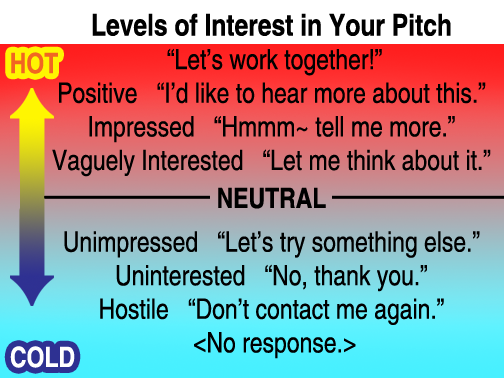
Pitching a story to a publisher can be incredibly difficult, especially when you’re pitching cold. By ‘cold’, I mean that an editor hasn’t approached you looking for writing material and you’re sending it in without any prior ‘heat’ (interest). The cold pitch is the absolute worst position to be in because an editor has absolutely no reason to pay attention to you, and probably has dozens of better things they could/should be doing with their time. Never forget that! Most of the advice I give is centered around this simple fact: You are not a priority when you’re cold pitching a project to a publisher. You have to grab their interest and bring them on board the idea, taking them from uninterested, through neutral, to excited about working with you.

An editor’s primary job is to ensure their current projects are running smoothly (and here’s a hint – it’s extremely rare for projects to run really smoothly). After that’s done for the day they probably want to go home to their family and have some sort of a life. Assuming having a normal life isn’t a viable option for them, then there may be a need for new books/projects, but when those times come up an editor is going to contact trusted/dependable/known talent before anyone else. Why wouldn’t they? Why take a risk on someone who is unproven and (probably) going to require a ton of extra hand-holding to complete the same task an experienced creator could do, especially if the editor could end up putting their own job and reputation on the line if it gets all screwed up?

Think carefully about that. Never forget it. Everyone wants to work with people who are going to make things run smoothly and deliver the goods. Your pitch needs to convince them that you are one of those people (because you are, right? 🙂 ).

The above is why companies like Marvel and DC have a ‘No Blind Writing Submission’ policy. They want people who have previous experience and are already consistently producing high quality stories. They have a large pool of experienced talent to choose from and don’t want to take risks on unknown writers. The simple truth is they’ll approach you (once you have a viable body of work) instead of you approaching them.

Brutal, eh?

But – here’s the good side of things. There are many other outlets for comics and many other publishers you can approach with your rockin’ creator-owned story ideas: Image Comics, Oni Press, Archaia, IDW, Boom!, First-Second, Dynamite and a ton of other great companies producing award-winning kick ass comics. There are opportunities if you can show that you’re professional and capable, even for first-time creators. That doesn’t even take into account self publishing or putting your work directly online, which is more valid than ever before.

So, assuming after all my rambling above you still want to go the pitching route, I suggest you make a strong first impression. You have to make sure your pitch is high quality, easy to digest and engaging.

In short – A pitch is all about clearly explaining your idea and justifying why you are the right person to see it through.

There are many ways to do that and, as long as it achieves the above, you’ve pitched it well. Cross your fingers and see where it goes from there.

I know this was quite the preamble, a blog post all its own, with a mixture of “no one wants to read your stuff” and “get ready to work your butt off”, but that’s a dose of reality I think some people need to hear about the process before we get into the nitty-gritty of it. Before I talk about format, hook, theme or how much information is needed, I felt it was important to talk about the overall purpose of a pitch and what kind of stuff you’re up against when starting out.

Now you know.

If you found this post helpful, feel free to let me know here (or on Twitter), share the post with your friends and consider buying some of my comics or donating to my Patreon to show your support for me writing this instead of paying work. 😛

Click here to read on to part two of this pitching tutorial

Rambling About How I Write Comics – Part Five

In the previous parts of this tutorial series, I’ve covered brainstorming, story pacing, page planning and scripting. I wanted to get down some of my thoughts on dialogue before I wrap it all up.

Dialogue writing is a unique challenge. In a medium like comics where you rarely have the luxury of using prose to paint a scene, dialogue becomes even more important. The art in a comic makes up a large part of the storytelling experience and the dialogue/narrative text needs to work well with the visuals to create a cohesive collaboration. When dialogue is used properly (and lettered well, but that’s another topic) the comic flows, moving the reader confidently through the story.

As I mentioned in my previous post, dialogue is the only text from the script the reader sees on the finished comic page. Getting character dialogue to sound ‘right’ and inform at the same time is crucial.

How a character speaks tells a reader a lot about their personality, attitude, and motivation. When I describe a scene to the artist in my script, I make sure they’re aware of the character’s attitude and purpose. In short, what they’re doing and why. That way the posing/body language they use fits well with the attitude I want to see coupled with the dialogue I’ve chosen.

Then, the tough part – scripting speech. It’s like acting except I’m playing out the scene in my head, imagining what the character would say in this situation. Remember that characters aren’t necessarily going to spout their motivations aloud. Personality, speech and action all work together to create an interesting and memorable cast. Secrets being kept, confidence, innuendo, sarcasm, wordplay and some times what characters don’t say at all can help communicate different traits.

My first pass is usually long and rambling, pouring out information I think I need to get across. Unless I’m on a roll and really ‘in-character’ the first version I come up with is usually cold and lifeless. Here’s an example, just off the top of my head:


                                     CHARACTER
           If we don’t get out of here by midnight, we’re going to die.

There’s nothing grammatically wrong with that line, but it’s boring. It may be relevant information to a scene I’m writing, but it sounds really generic. It could be attributed to any character in the scene and wouldn’t sound any better or worse. What I try to do is tailor that line to a specific character in the scene and have them say it in a way that accentuates who they are.

If the dwarf from Skullkickers said that same line, it might go:


                                       DWARF
           If we’re nae high-tailed ‘ere by peak o’ the moon, we’re as
           good as corpsed.

It’s the same information, but spoken in a way that feels far more fitting for the dwarf, filled with his particular cadence and personality.

If an occult genius were relaying the same information it could go:


                                      GENIUS
          If we cannot escape by the witching hour, I fear we may not 
          live to see dawn’s light.

Or a neurotic teenager:


                                      TEEN
          We’ve gotta get out before midnight, guys. If we stay... 
          we’re dead meat.

Or the punk protagonist from an M-rated comic series:


                              PUNK WITH TOURETTES
          If we don’t get the fuck out of here before midnight, 
          we’re full-on fucked.

I get into character, try different versions and, most importantly, I say them out loud. The best way to test if the dialogue I’ve written ‘sounds’ right is for me to hear it! Some lines are subtle, others are ridiculous and ham-fisted, it really depends on the character I’m writing. I imagine the scene and speak the dialogue aloud, feeling through whether it flows and properly punctuates the panel I’m working on. Sometimes I’ll find a great line that doesn’t fit in that spot, so I cut and paste it into a separate scrap text file so I can look for a good place to put it later on.

Unless the character I’m writing is known for being overly verbose, I trim fat from the dialogue I write. I try shorter, punchier versions of lines to see if I can get the same information and personality across with less dialogue. When I read a comic that has gigantic word balloons filled to the brim, my eyes tend to gloss over them. I feel like the text is choking the life from the artwork. I want the artist to have room to let loose and strut their stuff. If I have a really dialogue/text heavy page I make sure it’s an absolute necessity for the story. Comics are a visual medium, so if there’s a way I can amp up the visuals instead of info-dumping, I’ll do that instead. When a lot of text is unavoidable, I let the artist know in the script that this section is writing-centric, a quick warning so they can plan their page rough accordingly to give me extra space.

One of the things Skullkickers has given me lots of practice with is writing dialogue for action scenes. I’ve become a bit of a stickler for combat chatter. For me it’s got to be direct and (forgive the pun) punchy. When I read comics where a character spouts five rambling lines of dialogue in mid-air and another three lines as they get punched, I kind of lose my mind. I want my action scenes to feel tense and quick, punctuated with dialogue rather than overwhelmed by it. Occasionally a character can say something mid-attack, but even then it’s going to be short and sweet. I space the talking out over multiple panels so the action keeps moving or avoid acrobatic soliloquies altogether.

Format-wise, I use underlined words in my scripts to indicate that a word should be bold in the final lettering. I use full caps to indicate that it should be a larger font and bold. These indicators help give the dialogue a clear rhythm so the reader knows where to put emphasis while they read.

So the line:


                                       DRIVER
           We’re leaving, Rachel. Get in the truck and don’t say a word.

Could be written as:


                                       DRIVER
           We’re leaving, Rachel. Get in the truck and don’t say a word.

With the words “leaving” and “word” stressed by the speaker, or:


                                       DRIVER
           We’re leaving, Rachel. Get in the truck and don’t say a word.

And this time “Get”, “truck” and “don’t” are given more weight. Say both versions aloud, emphasizing the underlined words, and you’ll feel the difference.

Don’t forget ellipses. They’re an easy way to indicate pauses, slowing down the rhythm of the speech.


                                       DRIVER
           We’re... leaving, Rachel. Get in the truck ...and don’t say 
           a word.

With those ellipses in there it gives a sense that the driver was making his decision after he already started talking. He paused to think about it and then stressed “leaving” to finalize the choice being made. The second set of ellipses creates another pause, like he’s finished his thought about Rachel going to the truck and then remembered to tell her to be quiet. The ellipses change the mood and rhythm of the line quite a bit. The driver here sounds less confident, a bit more shaken, even though the words being used are the same.

Another trick I’ll use is quick italicized descriptions under the character name to let the letterer and artist know how a character feels or where they are in the scene if that’s important. Here’s a quick example, using everything I’ve shown above, all coming together to create a panel with distinctive character dialogue and directions for the artist and letterer.


Panel 3
Driver looks unimpressed as he watches the drunk stumble around off panel.

                                     DRIVER
          Don’t you think you sh-

                                      DRUNK
                       (interrupts Driver, off panel 
                        shaky balloon with uneven text)
          Yu think yu kin order me ‘round ‘ere? FUKOFF, yu! ...I'll
          ...I’ll tell yu shitall!

The panel description is short and clear, stressing that the focus here is the driver’s reaction to what he’s seeing, not the drunk. The drunk’s strange and improper dialogue denotes his emotional state and motivation, using bold words and ellipses to showcase the inebriated rhythm.

Keep dialogue clear, use it to enhance the story and make it character-centric. That’s the technique that’s worked for me.

I hope you’ve found these comic writing ramblings useful. As I stated in earlier posts, this isn’t any kind of absolute-must-follow method, just the way I work and a few tips. If you found these posts helpful, feel free to let me know here (or on Twitter), share the posts with your friends and consider buying some of my comics to show your support.

Also, let me know if you have any questions about the process. I’m thinking of putting together future posts about story pitching if there’s enough interest from people reading along here.

click here to read part 1 of the next tutorial series on pitching story ideas

PS: Mom, if you’re reading this blog post – sorry for all the swearing up there. I love ya. 😛

Rambling About How I Write Comics – Part Four

In the previous parts of this run through/tutorial, I’ve covered initial brainstorming, story pacing and issue by issue/page by page planning as a way to structure my writing work and make sure I’m delivering everything I need. Finally, we’re at scripting. For a lot of people, the other planning stuff I covered isn’t actually writing, the scripting is. I think it’s all part of the process but, either way, here we are finally at the script.

Comics are quite a unique medium. If you’re reading this I’m sure you already know that. The ability to structure a story with words and pictures in tandem brings a lot of strengths from both prose writing and illustration, while adding a lot of new elements to the mix by combining the two. Placement of text, composition of imagery and size/shape of panels can vastly change how a reader perceives the story.

Some writers leave panel size/shape/focus up to the artist, while others get ridiculously specific. I usually steer towards the “anal” half of that balancing act, but I’m always open to hearing from the artist I’m working with. If they have a better way to present the page and can enhance the impact, that’s awesome. The longer I work with a specific artist, the more comfortable I get in letting them decide. At the start of most new projects I’m quite detailed as I try to establish a baseline for the artist in terms of how the story should feel.

I’ve heard that there are writers who generalize their dialogue and put final speech text in after the art arrives. I’m not one of those people. I want the characters to have an established voice that inspires the artist and, if I need to edit things a bit once the art is done to make it fit better, that’s fine.

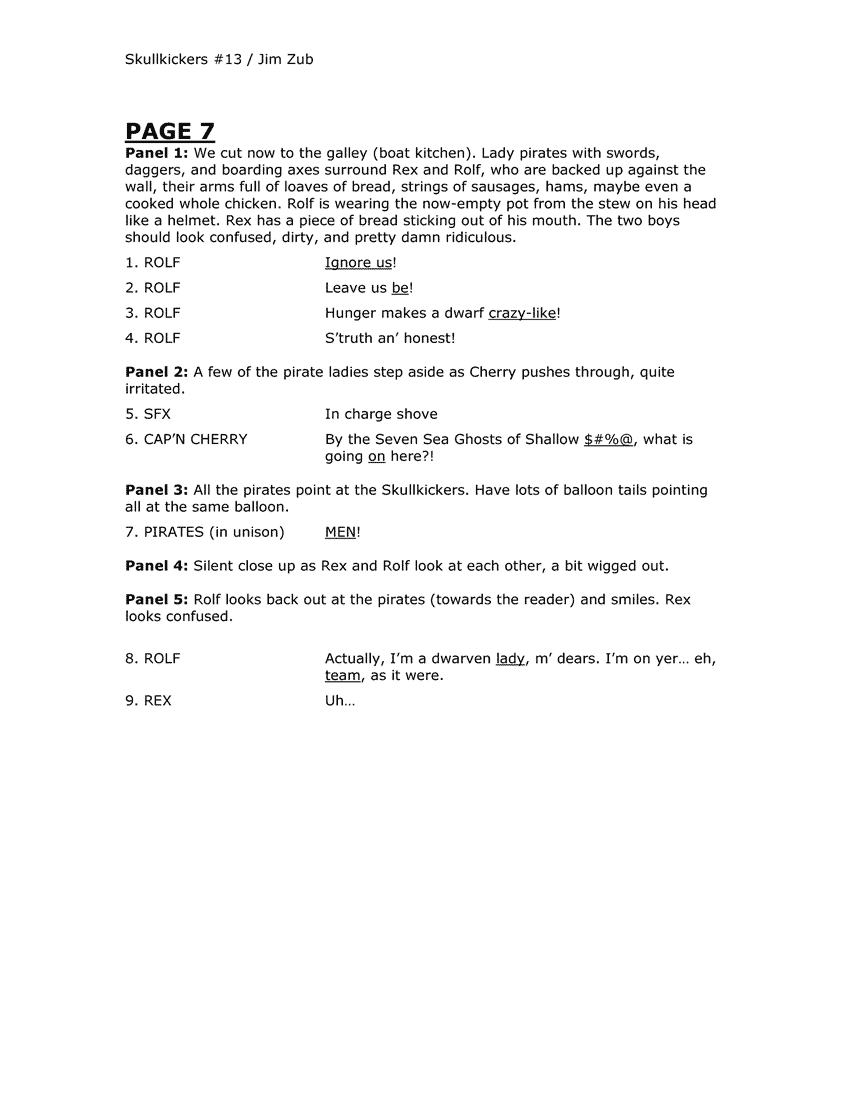
Here’s a sample page of script from Skullkickers along with the finished page from issue 13:

SK13SampleScriptPage

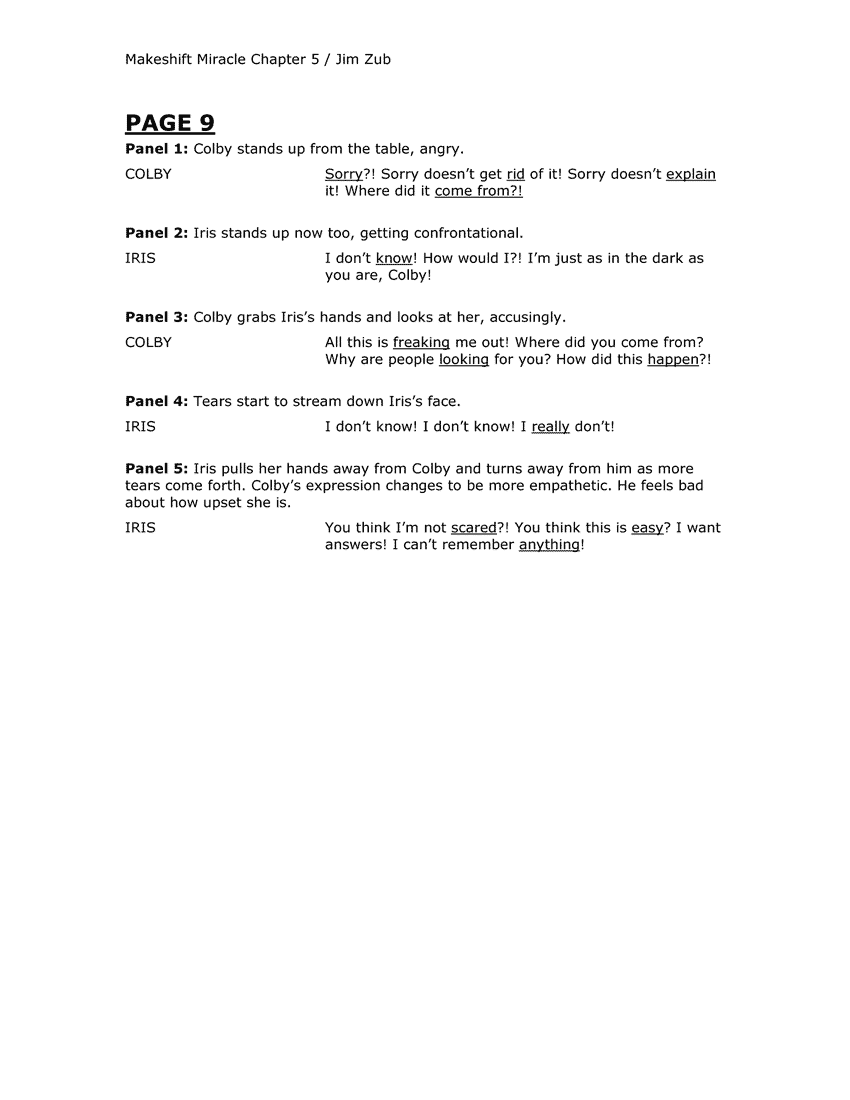
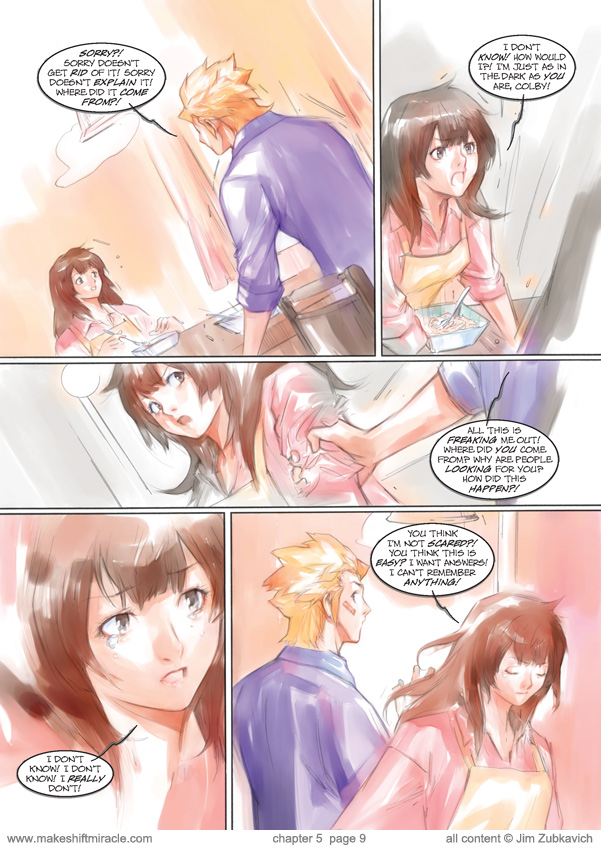
And here’s a sample script page from Makeshift Miracle along with the finished page from chapter 5:

MMSampleScriptPage

You can also check out the complete script for Skullkickers #1 right HERE.


October 2013 Update: Since this post was originally put up I’ve switched my script format to the one used by Fred Van Lente and several other industry writers. It’s a compact template that imparts all the required information with clear caption/balloon/sound effect numbering to make the letterer’s job easier. I’ve updated the samples above to reflect that change and recommend you visit Fred’s website to snag the template for yourself.


The key, for me anyways, is to set each scene as clearly as I can in terms of focus. Quite simply – what needs to be shown in order for a particular page/panel to work? Sometimes I’ll get specific about the panel size or angle if I need a certain effect, but when I’m in the groove I’ll just as often explain the main focus of a panel (the information that needs to be imparted) and let the artist pick an angle that works for them.

One of the strangest parts of writing Skullkickers is explaining what’s supposed to be funny in the script. It’s probably the least funny thing I can do, deconstructing a joke that way, but it’s important that Edwin knows what the reader is supposed to see and why we’re stressing that part so the humor comes through loud and clear. If a reader can’t tell where they’re supposed to be looking or what the focal point is, they’re not going to be amused. The pacing and joke will be lost.

Script cadence and detail is different for every writer. Some use point form notes, others describe in depth. Some people keep it formatted like a movie script, while other comic scripts read like a conversational letter casually written to the artist. Any of those approaches can work if the communication is clear and the artist has all the relevant information they need to illustrate the story.

The script format I’ve grown comfortable with has dialogue inset with underlined words indicating bolded/emphasized words for the letterer. I list each page and the number of panels so it’s really clear to the artist what the pacing is when they’re thumbnailing out their page roughs. Action scenes are rocked out with simple indications of where characters are and what they’re doing. During ‘talking head’ scenes I try to give indication about what characters are doing as well so it’s easier for the artist to think about body language and how that will affect the dialogue.

Coming from an art background, I find it very helpful to imagine how the whole scene plays out in my mind, even though I know the artist will have a different version of it in the end. Visualizing it for myself as I’m scripting helps me think about panel pacing and any setting notes I need to add to the script so the artist has a clear picture in their mind too.

After doing a first draft, when deadlines allow, I let the script sit for a few hours or (ideally) overnight. That way I have time to step away and take a fresh look at it. I re-read through each part to make sure I haven’t missed crucial information or didn’t skip words while typing.

Once I have my story plan and page-by-page pacing list, the scripting process can go quite quick. Since the panel description text only gets read by the editor, artist and letterer I’m less concerned about making it ‘perfect’. The artist is going to bring their own visual ideas into the collaboration and will let me know if something isn’t quite as clear as I imagined it. The most important part of the script is the actual dialogue because that’s what the reader is going to see directly from me on the finished page.

In my next post I’ll go over my dialogue process and some little tricks I use to try and create natural sounding character speech in my scripts.

I hope you find my ramblings useful. If so, feel free to let me know here (or on Twitter) and share the posts with your friends.

Click here to read Part 5

Rambling About How I Write Comics – Part Three

I’ve talked about initial brainstorming, story progression and segmenting a comic story into issues/chapters. In this post I cover page-by-page pacing. It’s not a technique I hear much about, but I’ve found it invaluable for comic writing and hope you find it useful too.

Working with an artist who understands how to enhance and communicate a story makes a huge difference, but as the writer it’s your job to make that as easy and clear for them as possible. Comic writers need to think a bit like artists and comic artists need to think a bit like writers. The easiest way for me to understand where the visuals are all going to go and how they fit together is to create a quick page-by-page pacing list. It’s nothing fancy, but it is quite helpful.

I take a text file and create a row of page numbers and then go through my issue by issue breakdown to figure out how many pages each part of the issue will need. It gives me a simple way of measuring how much emphasis (page time, if you will) is being used for each scene. I can double check that it all fits and is well balanced before I start scripting. In an action-oriented series like Skullkickers I can make sure there’s enough ass kicking. It’s the main thrust of the series and I don’t want to get so caught up in talking scenes that I lose track of that emphasis on combat. The last two issues of each story arc are usually wall-to-wall action. For my other comic stories I have quite different plot/mood goals and adjust the pacing accordingly.

A page-by-page pacing list also gives me an easy way to ‘see’ where ‘page turners’ will go. Assuming my story starts on page 1, then each even-numbered page (2, 4, 6, 8, etc.) causes the reader to flip to a new spread. If I want to subtly encourage them to keep reading or reveal a big surprise, using the page count to my advantage helps a lot. If a character turns to look behind them because they think they’re being followed on the last panel of an odd-numbered page, we want to turn the page and find out who they see. That’s a cliché example of a page turner, but it works. If I put that reveal on the odd numbered page instead, then the reader would already have the surprise ruined for them as their peripheral vision picked it up.

Okay, so hopefully I’ve convinced you that a page-by-page pacing sheet has merit. Let me assure you, it’s not complex. It’s a point form list. Here’s an example of a pacing sheet from Skullkickers issue 3:


SKULLKICKERS #3

01 Camped out under the stars – full page
02 Banter/poison
03 Merchants prepping to attack
04 More banter/eat the stew
05 Peyote dream begins
06-08 DREAM and PROPHECY? – 3 page spread
09 Wake up/barf/revelation
10 Merchants fail
11 Travel to the tower. Dwarf sick.
12 Arrive at the fortress. Guards.
13 Sneak by first wave of skeletons
14 Sneak quietly inside
15 Exploration
16 Reveal the necromancer’s ‘lab’
17 Mistake
18 Fight breaks out
19 Fight
20 Fight
21 Fight/human hides
22 Dwarf captured by necromancer – full page

Yup. That’s it. Just a simple list justifying the existence of each page.

Want to see how it all played out in the comic? You can read the whole issue starting right HERE.

In Skullkickers the pacing list is usually quite simple. On more complex stories I’ll have more points per line, but the overall approach is similar. The page-by-page pacing gives me a clear sense of how much time is being given to each scene, where the page turners will be and ensures that all the plot points I need covered in the issue will fit.

I still have tons of creative flexibility in how all of the above is presented when I do my actual scripting, but it’s a crucial map. When I start scripting I have clear goals about where it’s headed and don’t waste time writing material that isn’t relevant. If I come up with a better way to pace things as I script, I’ll usually go back to my page-by-page list and adjust it, so when I stop mid-script my plan accurately reflects what I’ve already completed.

The issue breakdown and page pacing also act as an important reminder and inspiration point for me. When I’m juggling multiple (often, very different) projects at the same time it can be tough to get ‘back into the groove’ on writing. Having a plan puts me back in the right head space to keep working. It’s far easier for me to write at odd times or in strange places because the story plan solidifies my productivity. I’ve written at airports, on trans-Atlantic flights, in hotel rooms… anywhere I can get my laptop up and running. Even when things are crazy-busy I can find time to write one or two pages inbetween a hundred other things that need to get done. I can walk away and, when I come back, that outline and pacing sheet reminds me of where I was and where I need to go.

My comic writing method front loads most of the story building at the start, developing the road map. By the time I sit down to actually script, almost all of those technical/plot issues are solved so I’m free to concentrate fully on describing really cool places, brainstorming wild action or coming up with catchy/ interesting dialogue. I’m no longer worried about whether or not the page I’m working on at that moment is going to be relevant or pace properly – it does and it will because I already figured it out, issue-by-issue and then page-by-page.

In my next post I’ll talk about the actual scripting process. I hope you find my ramblings useful. If so, feel free to let me know here (or on Twitter) and share the posts with your friends.

Click here to read Part 4

Rambling About How I Write Comics – Part Two

In part one I talked a lot about story flow and initial brainstorming. This time I’m going to go more in-depth with the planning process.

As I mentioned before, I’m a story structure nut. I rarely write my comic scripts without previously breaking down the story into point form notes that act as a guide for the main ‘beats’.

This is how I do it.

After brainstorming a jumble of ideas – possible set pieces, action scenes, motivations, characters, themes, jokes, sometimes even snippets of dialogue I think might be important, I start putting them in a rough sequence.

• In order for this ‘thing’ to work/happen, what needs to come before it?
• What information does the reader need in order for this next part to make sense?
• How do we get from this part to the next one?
• Most important – Is this entertaining?

Assembled in rough order, what seemed like a lot of ‘stuff’ when I began opens up into chunks of content with gaps in between that need to be filled – Gaps of logic, gaps of motivation, gaps of time, you name it. Before I tighten all that up, I start separating the story into issues or chapters.

I’ll use Skullkickers as my major example here. In Skullkickers, I have 5 issues for each story arc, and each one of those arcs builds towards the master story (which, at this point, looks like it’s going to encompass 6 arcs). Based on the type of story Skullkickers is (unapologetically over-the-top action-comedy sword & sorcery), it feeds on action, and lots of it. Each issue needs to open in an entertaining way and end with some kind of cliffhanger or surprise. That kind of storytelling fits Skulkickers very well, so when I start separating my brainstormed bits into 5 ‘parts’ I start to see if certain issues are overloaded or skimpy in terms of content:

• Have we given the characters proper motivation to do what they’re going to do?
• Is there enough action?
• Do we open strong and end strong?
• Are the stakes being raised in each issue of the arc with bigger/badder threats leading to the climax?
• Am I avoiding repetition in the types of conflict being shown and how our characters deal with them?
• Most important – Is this fun? Does it ‘feel’ like a Skullkickers story?

The above questions are specific to the pacing of Skullkickers. A lot of them carry over to other stories but that list isn’t perfect. Each project I work on has different story flow parameters and different questions core to how I think they should work. Quite a few people have told me that Makeshift Miracle reads like a completely different person wrote it, and I’m proud of that. It was built to read very differently.

Scenes get trimmed or expanded to fit. Threats are added, moved or taken away. I double check my master story plan (the 6 arc plan) to make sure the overplot that needs to be addressed in this arc is included. At every stage I need to be able to ask myself “Why are the characters doing this?” and have a valid answer that fits the plot and their personalities. It has an internal logic. It can take quite a bit of time, but the exercise of doing the story breakdown helps generate a lot of new ideas for me. If any parts I came up with aren’t used, I put them away for possible future use.

The original idea for the first story arc of Skullkickers was “by the end of the story these two idiots have to literally kick the skull of a gigantic creature”. That was the climax. I had to figure out how to get them there. I worked out the ending and then put a bunch of lesser, but increasing, threats in the way. Knowing where it was headed helped me brainstorm the assassinated noble, the zombie attack in the morgue, the necromancer, the possessed leg – all the rest. I varied the types of action, the location and the motivations along the way so it kept the reader wondering where it would all lead. You can read the whole story arc online for FREE starting right here, if you want.

My story breakdown reminds me of all the important plot points I need to cover so I don’t waste space. It keeps me from writing material that might get cut. Over 17 issues of Skullkickers (300+ pages), I’ve only cut/majorly rewritten 5-6 pages. I think that’s a good ratio. I don’t expect that the exact same methodical story building technique will work for everyone, but it works for me.

In my next post I’ll talk about page-by-page notes I use before I start scripting. From there, I’ll probably do a post about dialogue and timing. I hope you find my ramblings useful. If so, feel free to let me know here (or on Twitter) and share the posts with your friends.

Click here to Read Part 3

Rambling About How I Write Comics – Part One

While blabbing away on Twitter last night the conversation organically moved into comic writing. Explaining my process in short 140 character tweets was kind of a pain, and I realized it was worthy of a few blog posts, so here goes.

Comic writing is pretty free form in that there’s no standard format. Some writers do broad outlines of what’s happening in the issue and then let the artist draw the story, coming back at the end to add dialogue to the pages (this is the original ‘Marvel Method’) but that’s pretty rare nowadays. The stories being written now are way more intricate and most artists aren’t used to winging it quite so much.

The norm at this point is ‘full script’, which is just what it sounds like – writing out page by page and panel by panel descriptions of the action and dialogue so the artist can plan and illustrate the entire issue. It’s more time consuming, but also a lot more focused. Even within that full script approach, unlike movies and TV, there’s no standard for script format, terminology, spacing or anything. Each writer kind of kit-bashes a script format together that works for them and goes from there. If the format is clear and the artist gets the information they need, that’s the most important part. Everything else is just personal preference and a general professional look to the work. I previously posted up a copy of my script for Skullkickers #1 you can check out HERE if you want to see my particular scripting style.

I’m a story planning junkie. I know there are people who just dive in and start writing ‘page 1’ without any idea where things will go, letting the muses kiss their fingertips clattering along the keyboard, but I’m not one of those people. I plan a lot of the story structure up front and it’s time consuming, but once that idea and pacing phase is done I write fearlessly because I know the overall plan and won’t lose my way. I can clearly visualize scenes and anticipate how they’re going to play out, driving me to get to them. If I come up with better ideas along the way or inspiration strikes a scene, I can work it into the structure and adapt. I rarely need to cut or heavily revise material because I’ve built a solid story foundation to work from.

So, how does that work?

The first thing I do is brainstorm a series of point form ‘things’ – facts that need to be relayed to the reader so the story makes sense – character traits, settings, antagonists, goals, character changes or revelations. It’s a giant jumble of story ideas, characters and key moments – the raw story ingredients all piled up.

Then, I look at the length of my story. If it’s a work-for-hire comic story then the format is probably a set number of pages. If it’s my own project then I rough out how much space I think I’ll need to make it work (number of issues or number of pages for a self-contained graphic novel). Once I know the number of issues/chapters I can start to plug in my jumbled pile of elements and get a sense of story flow.

The classic approach to story flow is called the ‘3 Act Play’ and it’s one constantly used for movies, sitcoms, short films, novels… you name it. If you don’t know what it is and you’re shown it, you won’t be able to un-see it, but that’s not a bad thing. It’s a very logical way of building a story and isn’t as rigid as it may sound.

In simplest terms:

ACT 1 – INTRODUCTION: Who, What, Where and When (‘Why’ may not be answered in this stage). Who are the main characters? What are their initial goals? Where are we? When does this take place? Giving your audience this information in an entertaining way engages them and preps them for the larger story to come. Even in a mystery you need to impart enough of the above for people to feel grounded in the story and ready for act 2.

TRANSITION – THE CHOICE: In the classic version of the 3 Act Play the transition between Act 1 and Act 2 is the main character(s) really diving in to the challenges before them in a way they can’t go back from. If they could just back away without consequence, then the threat level doesn’t seem so bad. Once they’ve agreed to the mission, told that person they want to date or picked up the cursed artifact, they’re pulled in and can’t go back to their old life. They have to work through the resulting conflict.

ACT 2 – CONFLICT: Conflict can take on many forms and most stories have multiple types of conflict woven together. Physical, mental, emotional conflict. This is where all those classic concepts of Man VS Man, Man VS Nature, Man VS Technology, Man VS Society, Man VS Himself, Man VS Wo-Man comes into it. Your characters need something to rail against. Epic or mundane, there’s something to overcome. When it comes to classic Hollywood blockbusters this tends to be once-in-a-lifetime kind of conflict where people are saving the kingdom, the world, the universe kind of stuff, but conflicts can be as quiet or bombastic as you want. Romantic comedies have the exact same structure, just with a different set of goals and outcomes.

This act is the real meat of your story. Ideally, the audience wants to enjoy the shifting threats, victories, failures and unexpected twists that come from the conflict. There’s usually ‘callbacks’ to the things we learned about the characters from the introduction, but not so obviously that the audience can see exactly where the story is going. Creating unexpected but appropriate conflict is one of the toughest elements of storytelling, especially with a media culture that’s inundated with stories and has ‘seen it all’. If you can surprise them, that’s ideal. If not, at the very least make them care about the characters so they want to see it through to the end.

TRANSITION – CLIMAX: The biggest action, the most important decision, the most intense outcome is almost always saved for the end of act 2. It’s the payoff for everything we’ve built and is called ‘climax’ for a reason. This is where people admit their love for one another, the world is saved or the most ridiculous special effects money is spent. After this, it’s a steep downhill finish as things are resolved.

ACT 3 – RESOLUTION: Did they live “happily ever after”? Are their lives an echo of who they were at the start? Has everything changed after conflict? This act tends to be the shortest since the audience has been given almost everything and we’re emotionally winding down. Medals are given out, things are learned (or ignored) and credits are rolled. If this is just one part of a larger story then there may be a lot of unanswered questions, but that’s okay as long as we’re keeping them in mind for the future, things moved forward and felt relevant to the whole.

An even shorter way of explaining it is the old stage magic credo:

“First I tell ’em what I’m gonna do, then I do it, then I tell ’em what I done.”

That’s a weird part of working on Skullkickers. Even if it feels ridiculous and random (because that’s how I want it to come across), the structure underneath isn’t. I’ve created a story that reads like it’s out of control and can’t possibly all work, but after the original short stories it was actually tightly built to feel that way. Underneath that chaotic mass is a larger structured story I’m chipping away at that, if I do my job correctly, will pay off in exciting ways, surprising the audience while still feeling appropriate. That’s the plan, anyways.

Whew. Okay, I went into a bit more depth then I’d originally planned. In another blog post I’ll talk about how I take my idea pile and use aspects of the 3 Act Play to make it all work together.

Click here to read Part 2